

7 Things We Often Hear About Autism, ADHD & Learning Differences And Why They Deserve a Second Look
When parents first notice that something feels different about their child's development, they often receive an abundance of advice.
"Let's wait and see."
"Boys talk late."
"They're just being stubborn."
"Don't put a label on your child."
These aren't comments made out of malice. More often than not, they're offered with love and the hope of providing reassurance. Family members, friends, neighbours, and even professionals may share advice based on their own experiences or understanding.
Sometimes that reassurance is helpful. Sometimes, however, it can delay the understanding and support a child needs.
At Insighte, we've had the privilege of walking alongside thousands of children and families over the past decade. While every child's journey is unique, we've noticed certain conversations come up again and again.
Here are seven of the most common—and why they're worth looking at differently.
1. "Let's wait and see."
Every child develops at their own pace, and it's true that not every concern points to autism, ADHD, or a learning difference.
But when questions around communication, attention, emotional regulation, learning, or social interaction continue over time, it's okay to seek guidance.
Reaching out doesn't mean you're rushing towards a diagnosis.
It means you're paying attention.
A conversation with a child psychologist or developmental professional doesn't always end with a diagnosis. Sometimes, parents simply receive reassurance, practical strategies, or suggestions that make everyday life easier.
Seeking support early isn't about labelling children.
It's about understanding them sooner.
2. "A diagnosis will label my child forever."
This is one of the biggest fears parents carry.
Many worry that once their child receives a diagnosis, people will only see the label instead of the child.
But a diagnosis doesn't change who your child is.
They remain the same child who loves dinosaurs, refuses vegetables, laughs at silly jokes, gets excited about birthdays, or spends hours building with LEGO.
What a diagnosis can change is understanding.
It can help explain why certain situations feel difficult, open doors to appropriate support, and guide parents, schools, and professionals in responding more effectively.
A diagnosis should never define a child.
It should help us understand them better.
3. "Bad behaviour means poor parenting."
When children have frequent meltdowns, refuse homework, struggle with transitions, or react strongly to situations, it's easy for others to assume it's simply a discipline issue.
But behaviour rarely exists in isolation.
Children communicate in many different ways, and behaviour is often one of them.
A child might be overwhelmed by sensory input, struggling to express emotions, feeling anxious, finding a task too demanding, or having difficulty with executive functioning.
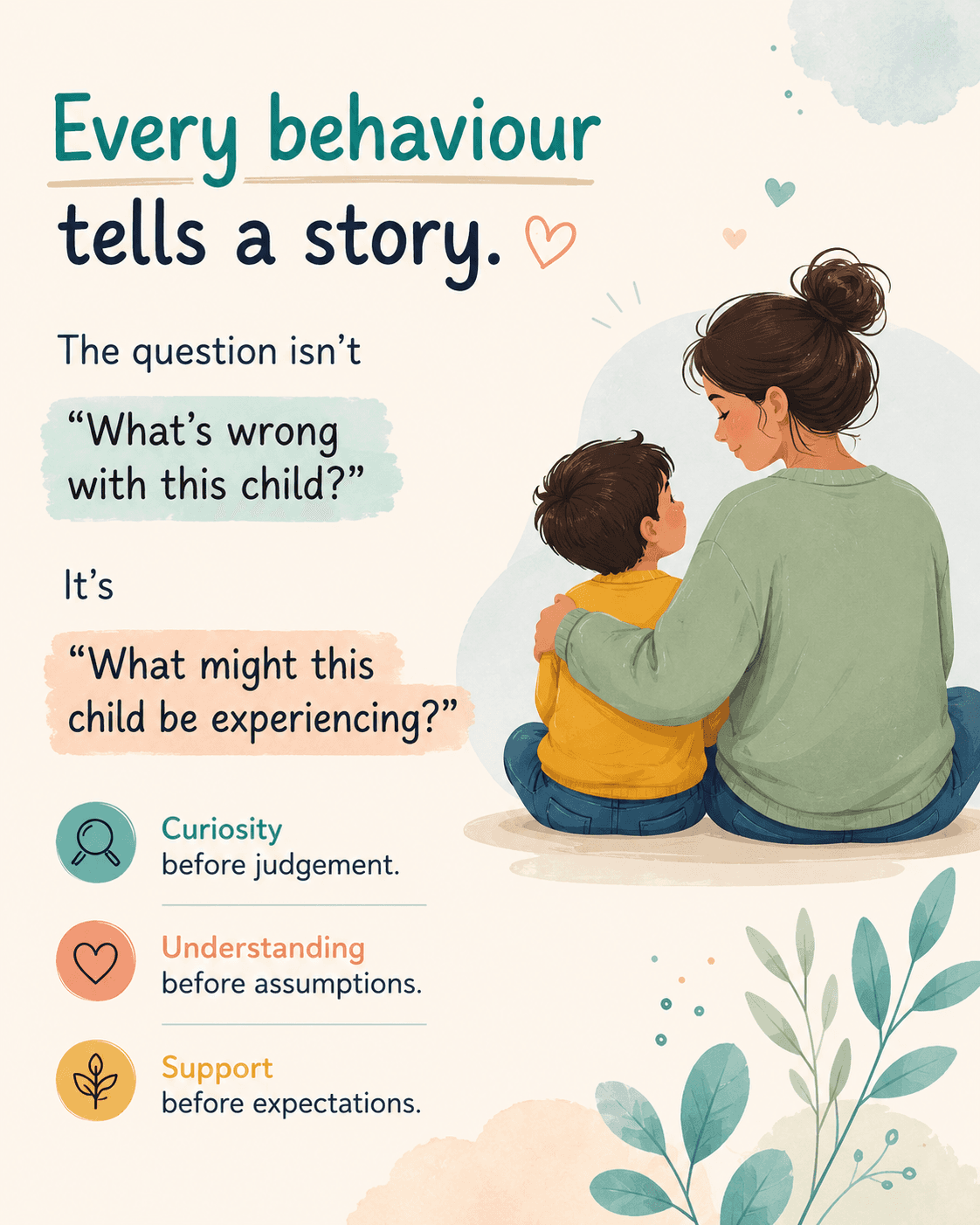
Instead of asking, "How do I stop this behaviour?", it can be more helpful to ask,
"What is my child trying to communicate?"
That shift—from judgement to curiosity—often changes everything.

4. "Therapy will fix my child."
Children are not projects to be fixed.
Therapy isn't about making a child behave more like everyone else or hiding the ways they naturally experience the world.
At its best, therapy helps children better understand themselves, develop skills, build confidence, navigate challenges, and participate more comfortably in everyday life.
It also helps parents and educators understand the child more deeply.
Sometimes therapy focuses on communication. Sometimes it's emotional regulation, executive functioning, social understanding, confidence, or supporting families to create environments where children can thrive.
The goal isn't to change who a child is.
The goal is to help them flourish as themselves.
5. "Children with autism or ADHD can't become independent."
Independence looks different for every child.
For some, it may mean managing daily routines confidently. For others, it may mean pursuing higher education, building meaningful careers, living independently, or developing fulfilling relationships.
There isn't one version of success.
Children with autism, ADHD, and learning differences can and do grow into capable adults. Some may need accommodations or support along the way, just as many people do for different reasons.
Support doesn't create dependence.
The right support builds confidence, skills, and opportunities for independence.
6. "If my child is talking well or doing well in school, they can't have autism or ADHD."
Neurodevelopmental differences don't have one "look."
Some children are highly verbal but find social interactions exhausting.
Others perform well academically while quietly struggling with organisation, attention, emotional regulation, or sensory sensitivities.
Many children also learn to mask their differences—working incredibly hard to fit expectations at school, only to come home completely exhausted.
Looking at one strength doesn't tell us everything about a child's experience.
Understanding the whole child always matters more than focusing on a single characteristic.
7. "Asking for help means I've failed as a parent."
Perhaps this is the belief we wish parents could let go of the most.
Parenting doesn't come with a manual.
No one expects parents to recognise every developmental difference, understand every behaviour, or know exactly what support a child might need.
Seeking guidance isn't a sign that you've done something wrong.
It's a sign that you're choosing to understand your child better.
The strongest parents aren't the ones who have all the answers.
They're the ones who stay curious, ask questions, and are willing to learn alongside their child.
Looking Beyond Assumptions
Every child deserves to be understood before they are judged.
Whether a child is autistic, has ADHD, experiences a learning difference, or is simply developing in their own unique way, the goal isn't to make them fit someone else's idea of "typical."
The goal is to understand how they experience the world, recognise their strengths, support them through their challenges, and create environments where they can thrive.
When we replace assumptions with curiosity, labels with understanding, and judgement with compassion, we give children something far more valuable than reassurance.
We give them the opportunity to be seen.
At Insighte, that's what guides every conversation we have with families.
Because meaningful support begins by meeting every child exactly where they are.