

Looking for a Child Therapy Centre in Bangalore? A Parent’s Guide to Finding the Right Support

Finding the right support for your child can feel overwhelming.
You may have noticed changes in your child's behaviour, emotions, communication, learning, friendships, or everyday routines. Perhaps the school has suggested speaking to a professional, or you may simply feel that your child needs some additional support.
When you start searching for a child therapy centre in Bangalore, you will find many different options — child therapists, child psychologists, counselling centres, developmental professionals, and therapy programmes.
So how do you know what kind of support your child needs?
The first step is to understand what your child is experiencing and how it is affecting their everyday life.
When might a child benefit from therapy?
Children don't always have the words to explain what they are feeling.
Instead, emotional or other difficulties may show up through changes in behaviour, communication, school participation, relationships, or everyday routines.
Parents may notice:
Frequent emotional outbursts or difficulty calming down
Anxiety, fears, or excessive worries
Difficulty expressing feelings
Withdrawal from family or friends
Difficulty adjusting to changes or transitions
School refusal or distress related to school
Social difficulties
Difficulty communicating needs
Behavioural challenges at home or school
Low confidence or frustration
Difficulty coping with everyday situations
Challenges related to neurodivergence or developmental differences
Experiencing one of these challenges does not automatically mean that a child needs therapy.
However, if a difficulty is persistent, is affecting everyday life, or is causing distress to the child or family, talking to a qualified professional can help you understand what may be happening.
What does child therapy involve?
Child therapy is not simply a smaller version of adult counselling.
Children often communicate and process experiences differently from adults. Depending on their age, development, communication style, and individual needs, therapy may involve play, art, conversation, activities, emotional regulation strategies, communication support, or other developmentally appropriate approaches.
A child therapist may work with a child on areas such as:
Emotional regulation
Helping children recognise emotions, understand what they are experiencing, and develop ways to manage difficult feelings.
Communication and expression
Supporting children who find it difficult to communicate their thoughts, feelings, needs, or experiences.
Social and relationship skills
Helping children understand social situations, develop communication skills, and navigate relationships in ways that work for them.
Coping with change
Children may find transitions such as changing schools, moving homes, family changes, or other disruptions difficult. Therapy can provide a supportive space to work through these experiences.
Behavioural challenges
Rather than looking only at the behaviour itself, therapy can explore what may be contributing to it and what support the child needs.
Child therapist or child psychologist - who should you consult?
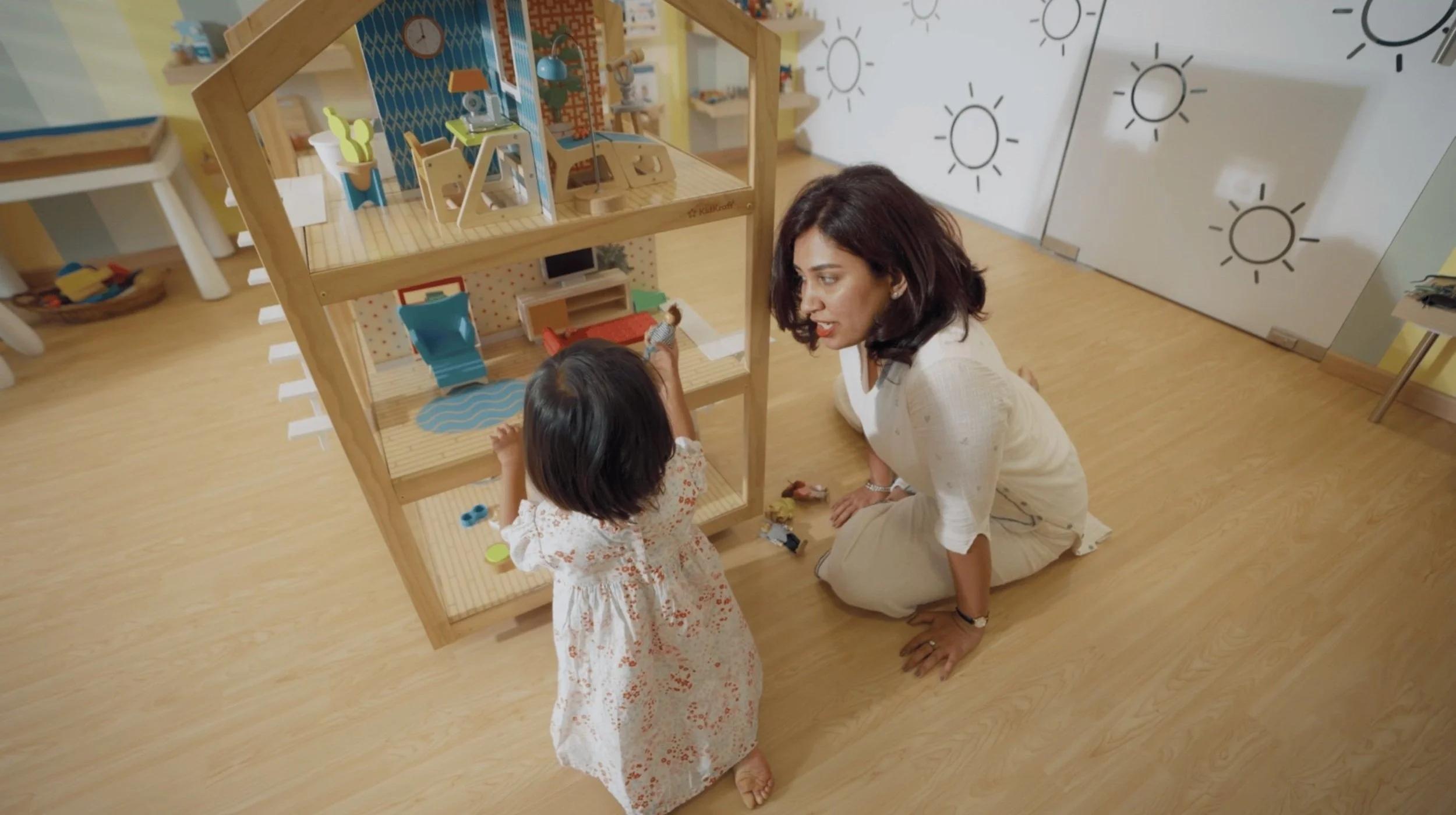
This is one of the most common questions parents have.
A child therapist may provide therapeutic support for emotional, behavioural, social, developmental, or everyday challenges.
A child psychologist may assess and support children with emotional, behavioural, developmental, or learning-related concerns and may provide psychological intervention depending on their qualifications and area of practice.
The right professional depends on what your child is experiencing and what kind of support is required.
If you are unsure, you don't necessarily have to figure everything out before reaching out.
A conversation with a qualified professional can help determine what kind of assessment or support may be appropriate.
What should you look for in a child therapy centre in Bangalore?
Bangalore has many child-focused mental health and therapy services, so choosing a centre can take some research.
Here are some questions parents can consider.
1. Does the professional understand children?
Working with children requires more than simply adapting adult counselling techniques.
The professional should be able to communicate with children in an age-appropriate way and understand their developmental stage.
2. Does the approach consider the individual child?
Two children with similar challenges may need completely different kinds of support.
A good therapeutic approach should consider the child's:
Age
Communication style
Development
Strengths
Interests
Environment
Family context
School experience
Individual needs
3. Are parents included?
Parents are an important part of a child's support system.
A therapist may work directly with the child while also helping parents understand what their child may be communicating and how they can support them outside sessions.
4. Is therapy connected to everyday life?
The strategies discussed during therapy should ideally have relevance to the child's everyday world.
For some children, this may mean considering what happens at home.
For others, school, friendships, communication, transitions, or community participation may be important parts of the picture.
5. Is there a focus on strengths?
Children are more than the difficulties that brought them to therapy.
Understanding their interests, strengths, preferences, and abilities can help create support that feels meaningful and achievable.
Does child therapy have to happen at a centre?
Not always.
For some families, travelling to a therapy centre is convenient and works well.
For others, the child's difficulties are closely connected to their everyday environment.
This is where home-based child therapy in Bangalore can be useful.
Home-based support allows professionals to understand the child's routines and environment more directly and, where appropriate, work on skills in the setting where they are actually needed.
For example, support may focus on:
Emotional regulation at home
Communication and expression
Daily living skills
Learning and academic support
Executive functioning
Self-management
Parent guidance
Community participation
The right setting depends on the child's needs and the goals of support.
What about children who need support at school?
Sometimes a child's difficulties aren't limited to home.
They may be able to manage certain situations with family but find the school environment challenging.
A child may need support with:
Following classroom routines
Transitions
Staying engaged with learning
Communication
Social participation
Emotional regulation
Managing sensory or environmental demands
Becoming more independent at school
In such situations, parents may also explore shadow teacher support.
A shadow teacher provides trained one-to-one support within the school environment, helping the child participate in classroom activities and work towards greater independence.
This is different from therapy, although the professionals involved can work together when appropriate.
When should parents consider professional support?
You don't have to wait until a difficulty becomes severe.
If you're repeatedly thinking:
"Something seems difficult for my child, but I'm not sure what."
that's already a reasonable reason to seek guidance.
A professional can help you understand whether the concern would benefit from therapy, assessment, parent guidance, educational support, school-based support, or simply monitoring over time.
Seeking support doesn't mean that something is "wrong" with your child.
It can simply mean that you're trying to understand your child better and give them the support they need.
Finding the right child therapy support in Bangalore
If you're searching for a child therapy centre in Bangalore, look beyond the number of services offered.
Consider whether the team takes time to understand your child as an individual, whether parents are included in the process, and whether the approach fits your child's needs and everyday environment.
At Insighte, child and family support is designed around the individual child. Our team includes child psychologists, therapists, special educators, and trained professionals who work with children and families across different areas of need.
Depending on the child and family, support may be provided through counselling and therapy, home-based programmes, school support, parent guidance, or a combination of approaches.
If you're unsure about what your child needs, start with a conversation with a qualified professional.
You don't need to have all the answers before asking for help.
Looking for child therapy in Bangalore?
If you're exploring therapy or support for your child, you can consult the Insighte team to understand what kind of support may be appropriate for your child's needs.