
Is My Child Ready for School? 5 Key Signs to Look For
Starting school is a big milestone - for both children and parents.
And one of the most common questions families ask is:
“How do I know if my child is ready for school?”
Many parents assume school readiness is only about academics like reading, writing, or counting. But true school readiness goes far beyond that.
A child may know alphabets and numbers but still struggle with:
School transitions
Emotional regulation
Following routines
Social interaction
Independence in daily activities
School readiness is really about whether a child is emotionally, socially, and practically prepared to participate in a school environment with support.
Here are 5 key signs that may help parents understand whether their child is getting ready for school.
1. Your Child Can Manage Short Separations
One of the earliest signs of school readiness is the ability to separate from parents for short periods without extreme distress.
It’s normal for children to feel nervous during school transitions, especially in the beginning. But gradually, children begin to:
Feel safe with another adult
Participate in activities independently
Recover after drop-off
Children who struggle with separation anxiety may simply need more emotional preparation and parent support before starting school.
Helpful experiences include:
Playgroups
Short activity classes
Staying briefly with caregivers or grandparents
2. They Can Follow Simple Routines and Instructions
Schools involve routines all day long:
Packing bags
Sitting in groups
Washing hands
Following classroom instructions
A school-ready child does not need perfect listening skills, but they should begin understanding simple instructions and predictable routines.
This helps children:
Feel secure
Adapt to classroom expectations
Manage school transitions more smoothly
Parents can build this through:
Visual schedules
Simple household tasks
Consistent routines at home
3. Your Child Can Communicate Basic Needs
Children entering school should be able to express basic needs in some form.
This could include:
Asking for help
Saying they are hungry or uncomfortable
Expressing emotions
Communicating toilet needs
Communication does not always have to be verbal. Some children may use gestures, visuals, or short phrases.
Strong communication skills help children feel safer and more confident in school environments.
4. They Are Building Independence in Daily Living Skills
Daily living skills are a very important part of school readiness.
Children slowly begin learning to:
Carry their own bag
Open snack boxes
Wash hands
Put away belongings
Manage simple self-care tasks
Independence helps children feel capable and confident in classroom settings.
This is especially important for:
Preschool readiness
Slow learners
Neurodivergent children
Children who need additional school support
Remember — independence develops gradually. Children do not need to do everything perfectly.
5. Your Child Shows Emotional Readiness and Curiosity
One of the strongest signs of school readiness is emotional curiosity.
Children who are emotionally ready often:
Explore new activities
Ask questions
Show interest in learning
Participate in play
Try again after mistakes with support
Children learn best when they feel emotionally safe.
Parent support plays a huge role during this stage. Encouragement, predictable routines, and emotional reassurance can make school transitions much easier.
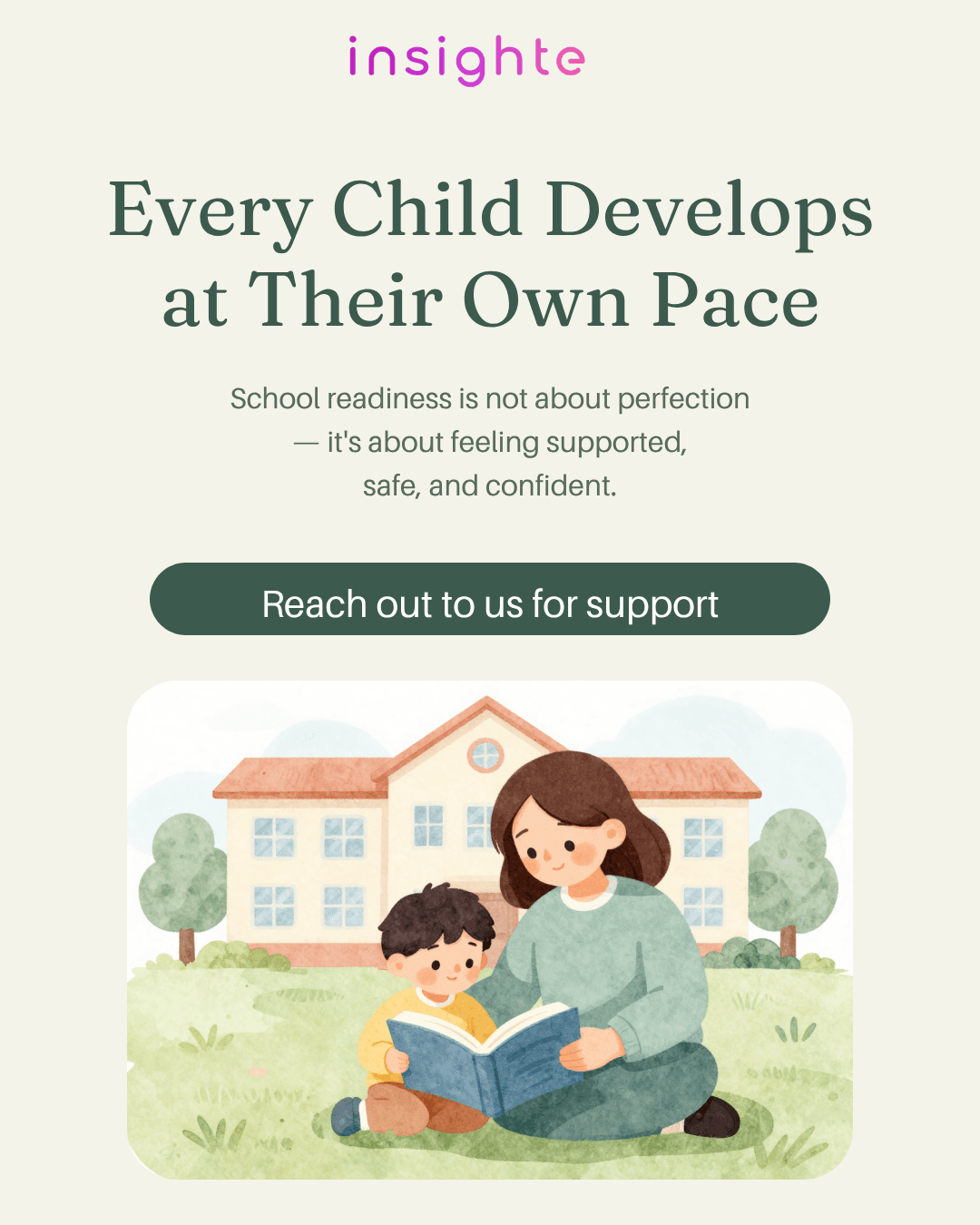
School readiness is not about creating a “perfect” child before school starts.
It is about helping children gradually build:
Emotional confidence
Communication skills
Independence
Social participation
Comfort with routines and transitions
Every child develops differently. Some children adapt quickly, while others — including slow learners and neurodivergent children — may need more support, preparation, and understanding.
The goal is not perfection.
The goal is helping children feel safe, supported, and confident as they begin their school journey.
Written By:
Athira Thomas,
Child Psychologist, Insighte