
Coping with Executive Dysfunction
verifiedInsighte care team

Coping with Executive Dysfunction
Challenges ADHDers face with executive functioning and strategies to support them
Executive functions are the cognitive processes and mental skill sets that primarily help you get things done. These skill sets are essential as they facilitate an individual's daily functioning; such as paying attention, planning, organizing, and prioritizing tasks. Being able to start and stay focused on a task and remain motivated to finish it. It helps regulate emotions and self-monitoring, and understand different viewpoints. ADHD and executive dysfunctions inhibit the smooth application of these skills causing the individual to function atypically.
For individuals struggling with executive dysfunction, home care services near me can offer valuable support. Home care services can provide personalized assistance tailored to an individual's needs, helping them develop strategies for better task management, emotional regulation, and focus. This one-on-one support in a familiar environment can promote independence and improve functioning, reducing the impact of ADHD-related challenges on daily life.
Below are some strategies that can address the daily challenges faced by ADHDers:
A step-by-step approach to completing tasks.
Dividing tasks into 3-4 steps and completing them one at a time, can be less overwhelming. Breaking them down into simple steps reduces stress as you gradually progress from one step to another.
Task/step elimination.
If the step itself is adding to your stress, you can eliminate the step (if it is not important) or find an alternative. Steps are created to reduce anxiety; it is better to eliminate the task or the step if it is hindering your day-to-day activity.
Rely on technology and visual and auditory reminders.
Setting specific reminders using alarms, digital calendars, applications, and to-do lists stuck on the wall and over the desk. Visual and auditory reminders provide cues to your brain to complete a task, and alarms or timers help in snapping out of freeze mode.
Accountability buddy.
Relying on a support system and having an accountability buddy to check on you and provide external motivation is essential. Sometimes to move you around even physically. Executive dysfunction can be nerve-racking, and relying on your support system is important.
Indulging in hobbies and allowing your hyper-focuser focus.
Hyper-focusing on projects and indulging in hobbies are extremely important. These activities will provide a dopamine rush to your brain, which needless to say, is imperative. Setting time aside for your hobbies and passion projects every day provides consistent and required dopamine micro doses.
Mindfulness meditation for 1-2 minutes.
Meditation works. Practicing it for 1-2 minutes daily is far more effective than 20-30 minutes. Allowing your mind and body to relax and ground itself reduces anxiety, improves concentration, and helps you process better.
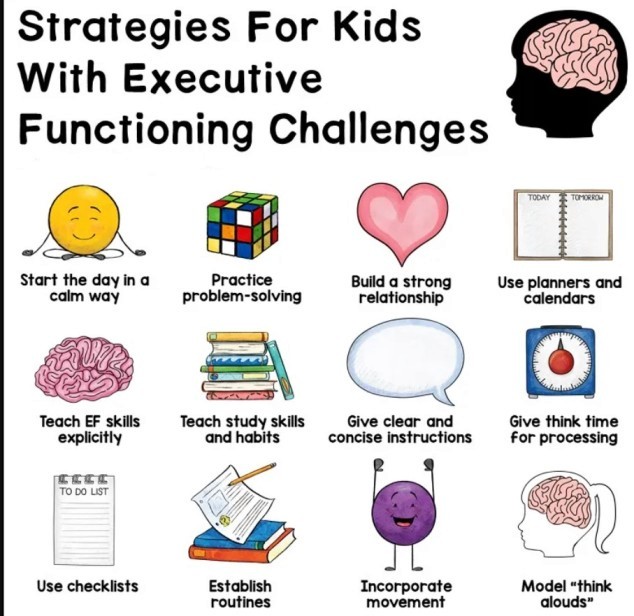
And no, ADHD and executive dysfunction are not laziness. Making tiny changes in your environment to accommodate can reduce anxiety and frustration. It is essential to understand your ADHD, what drives you and where your struggles are. There is no one size fits all solution, always improvise/modify the strategies to suit your needs and do away with what is not working for you.
For those seeking additional support, home care near me can be a valuable resource. Home care services can provide personalized assistance, helping individuals with ADHD create tailored strategies, reduce distractions, and build an environment that fosters success, all while promoting independence and reducing stress.
Keep reading

What are the executive function challenges faced by children with ASD?
What are the executive function challenges faced by children with ASD?Executive functions refer to the high-level skills that help humans get things done. They impact…
Read the storyarrow_forward
My Child Was Just Diagnosed with Autism - What Should I Do Next?
Hearing the words, "Your child is autistic," can bring a flood of emotions. You may feel relieved to finally have answers. You may feel overwhelmed by the uncertainty ahead. You…
Read the storyarrow_forward
2030 and the Future of Inclusive Education: Are We Preparing or Just Coping?
Inclusive education was once seen as a forward-thinking goal. Today, it’s an urgent necessity — not only from a moral standpoint, but also from a practical one. Classrooms are…
Read the storyarrow_forward